TYPES OF HEADACHE AND WHAT YOU CAN DO ABOUT IT
Headache is one of the most regular medical complaints. Most of the people experience them at some point in their daily life. It can affect anyone despite everything of age, race, and gender.
Headache can be a sign of your stress or emotional distress. Also, it can result from a medical disorder, such as migraine or high blood pressure, anxiety, or maybe depression.
Causes
Headache can start by hurting you in any part of the head, on both sides or on one side of the head.
There are many ways to describe headaches.
Primary headaches
Primary headaches are affected directly by the overactivity of, or problems with, structures in the head that are pain-sensitive.
This involves the blood vessels, muscles, and nerves of the head and neck.
General primary headaches include migraines, cluster headaches, and tension headaches.
Secondary headaches
Secondary headaches are signs that occur when another condition excites the pain-sensitive nerves of the head.
Types
There are different types of headaches.
Tension Headaches
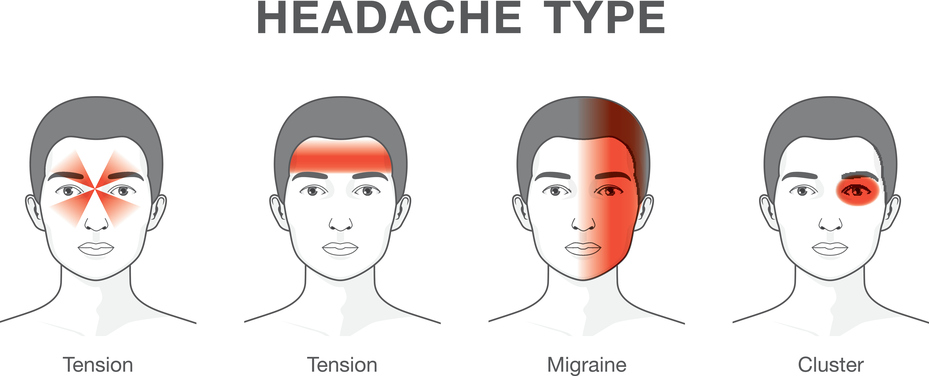
Tension headaches are the most natural form of primary headache. Such headaches usually begin slowly and gradually.
The person can feel like:-
-
- As if there is a strong band around their head.
- A continuous, low ache on both sides.
- Pain spread to or from the neck.
Tension-type headaches can be both episodic or chronic (continuous).
Episodic headaches are normally a few hours in duration, but it can last for some days. Chronic headaches occur for 15 or more days a month for a time of at least 3 months.
Migraines Headaches
A migraine is a primary headache disorder identified by repeated headaches that are moderate to severe. The pain may be accompanied by:
-
- Blurred vision
- Light-headedness
- Nausea
Migraine is the second most popular form of primary headache and can have an important impact on the life of any person.
A migraine can continue from a few hours to between 2 and 3 days.
Rebound Headaches
Rebound or medication-overuse headaches arise from excessive use of medicine to handle headache. They normally begin early in the day and continue throughout the day.
Along with the headache itself, rebound headaches can affect:-
-
- Neck strain
- Restlessness
- A feeling of nasal congestion
- Reduced sleep quality
Rebound headaches can generate a range of symptoms, and the pain can be changed each day.
Cluster headaches
Cluster headaches normally last between 15 minutes and 3 hours. It happens suddenly once per day up to eight times per day for a period of weeks to months.
The pain created by cluster headaches is:
-
- One-sided
- Severe
- Typically located in or around one eye
The affected part may become red and swollen, the eyelid may sink, and the nasal passage on the affected side may become stuffy and runny.
Thunderclap Headaches
These are sudden, sharp headaches that are usually defined as the “worst headache of anyone’s life”. They reach maximum intensity in less than one minute and continue longer than 5 minutes.
People who feel these sudden, severe headaches should search for medical evaluation immediately.
Treatment
The traditional ways of handling headaches are rest and pain relief medication.
General pain relief medicines are available over the counter, or you can consult a doctor for headache, can prescribe preventative medication.
It is very important to follow the doctor’s advice because overusing pain relief medicine can lead to rebound headaches.
Alternative Treatments
Several alternative methods of treatment for headaches are possible. It is very important to consult a doctor before making any major changes or beginning any alternative forms of treatment.
Alternative approaches include:
-
- Acupuncture
- Cognitive behavior therapy
- Herbal and nutritional health products
- Hypnosis
- Meditation
Research has not given any evidence to confirm that all these methods work.
Sometimes, a headache may result from a lack of a particular nutrient or nutrients, particularly magnesium and certain vitamins.
Home remedies
A number of steps can be taken to decrease the risk of headaches if they do occur:
-
- Put a heat pack or ice pack on your head or neck, but avoid excessive temperatures.
- Avoid getting stressed, Get Sufficient Sleep.
- Eat regular meals, taking care to keep stable blood sugar.
Exercising daily and getting sufficient rest and regular sleep contributes to overall health and stress reduction.
Headaches can be a sign of a serious condition. It is very important to see the doctor and take medical advice if they become more severe, regular, or persistent.

Dr. Sanjay Jain is a highly experienced psychiatrist based in Jaipur, India, with over 13 years of expertise in mental health. He holds an MD in Psychiatry from SMS Medical College & Hospital, Jaipur, and has further enhanced his qualifications with certifications such as NLE (Pennsylvania, USA), CRA (Singapore), and PGCPS. Dr. Jain is renowned for his global contributions to mental health research. He adopts a holistic approach to treatment, combining medication with patient education and collaboration to create personalized and effective treatment plans.